Looking for a Vitamin C cream in Pakistan? This guide covers what it actually does, its benefits for dark spots and uneven tone, which formula suits your skin type, how to use it correctly, and what to check before buying — including where BabyPearl Vitamin C Beauty Cream fits in.
Vitamin C is one of the more well-studied active ingredients in skincare, with research supporting its antioxidant, brightening, and collagen-related roles[1]. But results depend on the specific form of Vitamin C, the formulation, and how consistently you use it — not just the percentage printed on the bottle.
What Is Vitamin C Cream?
Vitamin C cream is a topical skincare product built around Vitamin C — chemically, ascorbic acid — or one of its derivatives, blended into a cream base.
In skincare, it is mainly used for antioxidant support, brightening and supporting the skin’s collagen-related processes. Research reviews have also discussed Vitamin C’s role in reducing melanin formation and supporting collagen synthesis[1].
However, clinical results can vary considerably between products because formulation, stability, concentration, penetration and skin tolerance all matter. Two products carrying the same Vitamin C percentage may not perform identically on skin.
What Does Vitamin C Actually Do for Skin?
Used consistently, a well-formulated Vitamin C product may help support:
- A brighter, less dull-looking complexion
- More even-looking skin tone
- Improvement in the appearance of some dark spots and post-acne marks
- Antioxidant protection against oxidative stress
- Collagen-related skin structure
- A smoother-looking appearance over time
None of this happens instantly, and results can vary from person to person.
The Real Benefits of Vitamin C Cream
Think of Vitamin C as a supportive, long-term skincare ingredient rather than a quick spot-fix.
Brightening dull skin. Sun exposure, environmental stress and other factors can leave skin looking dull over time. A well-formulated Vitamin C product may help support a brighter and more even-looking complexion with consistent use.
Fading dark spots and pigmentation. Vitamin C can interfere with processes involved in melanin production. Clinical research has also investigated topical Vitamin C for reducing UV-induced pigmentation[2]. However, pigmentation has multiple causes, so Vitamin C will not necessarily address every type of pigmentation on its own.
Antioxidant defense. Vitamin C has antioxidant properties that can help counter oxidative stress. This is one reason it is commonly included in morning skincare routines alongside sunscreen.
Collagen support. A 2024 review examined ascorbic acid’s role in collagen production, antioxidant activity and applications related to skin aging[3]. This does not mean Vitamin C cream will erase existing wrinkles, but it helps explain why Vitamin C is widely studied in skincare focused on photoaging and skin appearance.
A fresher overall complexion. Dullness, uneven-looking tone and dryness can occur together, which is one reason Vitamin C is often included in cream formulations alongside moisturizing ingredients.
Is Vitamin C Cream Suitable for Pakistani Skin?
Generally, yes. Vitamin C can be included in a skincare routine regardless of where you live, but skin type, product formulation and individual tolerance still matter.
Because UV exposure can contribute to pigmentation and photoaging, daily sunscreen is an important part of a skincare routine when these concerns matter. Vitamin C can provide antioxidant support, but it does not replace sunscreen.
Pakistan’s climate and sun exposure can vary by region and season, so your skincare routine should also take your individual environment and daily sun exposure into account.
A few other practical factors can affect which product feels comfortable day to day:
- Heat and humidity: Heavier, greasy creams may feel uncomfortable during hotter months.
- Oil production: If your skin is oily or combination, a lighter cream texture may be easier to use consistently.
- Where you buy matters: Choose the brand’s official store, an established retailer, or another reliable seller where possible. Check packaging, batch information and expiry details before use.
- Storage: Follow the manufacturer’s storage instructions and avoid unnecessary heat or direct sunlight, particularly with unstable forms of Vitamin C.
If your skin reacts easily, introduce Vitamin C gradually rather than starting several active products at once.
Vitamin C for Different Skin Types
Vitamin C is not restricted to one skin type — the formulation and the rest of your routine often matter more than the ingredient itself.
Oily skin: Look for a lightweight, non-greasy texture. If you already use products for acne or oil control, introduce Vitamin C gradually.
Dry skin: A cream containing Vitamin C alongside moisturizing ingredients may feel more comfortable and reduce the need for additional layers.
Combination skin: Look for a texture that provides enough hydration without feeling excessively heavy around the T-zone.
Sensitive skin: Proceed carefully. Some Vitamin C formulations, particularly stronger L-ascorbic acid products, may cause stinging or redness. Patch test first and reduce frequency if needed. If you have an existing skin condition, consider speaking with a dermatologist before combining multiple active ingredients.
Acne-prone skin: Vitamin C is not an acne treatment and should not be presented as one. It may be useful as part of a routine focused on the appearance of post-acne marks, while active breakouts may require other targeted approaches.
Types of Vitamin C Used in Creams
This is a detail many buyers overlook — and it can matter more than the percentage printed on the front of the package.
L-ascorbic acid is the pure form of Vitamin C most commonly discussed in topical Vitamin C research. It is also relatively unstable and can degrade when exposed to factors such as air, light and heat.
Vitamin C derivatives are used in skincare formulations with the aim of improving stability and/or tolerability. Their properties and supporting evidence differ from one derivative to another.
Common examples include:
- Magnesium Ascorbyl Phosphate
- Sodium Ascorbyl Phosphate
- Ascorbyl Glucoside
- 3-O-Ethyl Ascorbic Acid
A 2022 review examined topical Vitamin C derivatives and highlighted differences in stability, penetration and evidence between different forms[4]. Vitamin C on an ingredient list is therefore not one completely interchangeable ingredient.
Is a Higher Vitamin C Percentage Always Better?
No. A higher concentration is not automatically more suitable.
A formulation that your skin tolerates and that you can use consistently may be more practical than a stronger product that causes irritation.
When comparing products, consider:
- The form of Vitamin C
- Formula stability
- Supporting ingredients
- Packaging
- Your skin type
- Your skin’s tolerance
- How easily the product fits into your routine
For unstable forms such as L-ascorbic acid, protective packaging can also matter because exposure to air, light and heat can affect stability.
Vitamin C Cream vs. Vitamin C Serum
Neither format is universally better — the choice depends on the formulation, your skin type and how you prefer your routine to feel.
| Feature | Vitamin C Cream | Vitamin C Serum |
| Texture | Usually richer | Usually lighter |
| Moisturization | Often provides some moisturization | Depends on formula |
| Routine | Can simplify a routine | Often works well in layered routines |
| Oily skin | Choose a lightweight formula | Often comfortable for people who prefer light textures |
| Dry skin | Can provide added moisture | May need moisturizer afterward |
If you prefer fewer skincare steps, a cream can be convenient because it may combine Vitamin C-focused care with moisturization.
If you already have a moisturizer you like and prefer lightweight layers, a serum may fit more easily into your routine.
The real question is not simply “cream or serum” — it is which properly formulated product you can tolerate and use consistently.
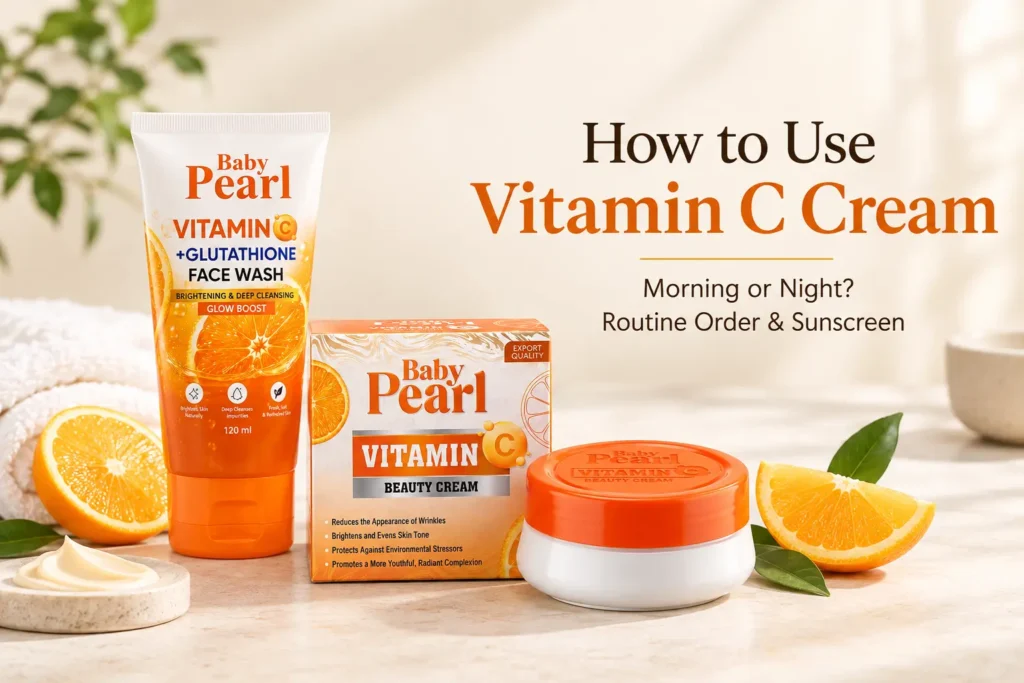
How to Use Vitamin C Cream Correctly
Morning: Cleanser → Vitamin C cream → moisturizer if needed → sunscreen.
Sunscreen is still important. Vitamin C provides antioxidant support but does not replace UV protection.
Evening: Cleanser → Vitamin C cream → moisturizer if needed.
How much to apply: Follow the product’s stated application amount. Applying a thicker layer does not automatically produce faster results and may increase irritation.
Morning or Night?
Either can work.
Morning use is popular because Vitamin C’s antioxidant properties complement a sunscreen-based routine.
If your routine already contains several active ingredients, using Vitamin C at another time of day may make your routine easier to tolerate.
How Often Should You Use It?
Many Vitamin C products are designed for regular use, but your skin’s tolerance should guide how quickly you increase frequency.
If you’re new to Vitamin C:
- Apply a small amount every other day initially.
- Monitor your skin for redness, stinging or peeling.
- If your skin tolerates it well, gradually increase frequency.
- Follow the specific product’s recommended directions.
- Stop use and seek professional advice if you experience significant or persistent irritation.
Layering Vitamin C With Other Actives+ Sunscreen: A practical combination for a morning routine. Vitamin C provides antioxidant support while sunscreen provides UV protection.
+ Niacinamide: These ingredients can generally be used together. If your skin is sensitive, introduce products one at a time.
+ Hyaluronic Acid: These can complement each other, with hydration alongside Vitamin C-focused skincare.
+ Vitamin E: Vitamin C and Vitamin E are commonly combined in topical antioxidant formulations, and research has discussed their complementary antioxidant roles[1].
+ Retinol: Both ingredients can be part of a skincare routine, but using several active ingredients together may increase irritation. Some people prefer Vitamin C in the morning and retinol at night.
+ AHAs/BHAs: Combining multiple active ingredients can increase irritation risk. Introduce products gradually rather than assuming more actives will automatically produce better results.
How Long Does Vitamin C Cream Take to Work?
What you may notice first: A brighter or more even-looking appearance may be one of the earlier visible changes.
What tends to take longer: Established pigmentation, texture changes and visible photoaging concerns generally require consistent use over a longer period[2].
There is no guaranteed number of days or weeks because results depend on the formulation, concentration, skin concern and consistency of use.
Be cautious about products promising dramatic results within a fixed short period.
How to Choose Vitamin C Cream in Pakistan
Do not use price or the Vitamin C percentage as your only filters. Check these factors instead:
- The actual Vitamin C form. Is it L-ascorbic acid or a named derivative?
- The complete ingredient list. Supporting ingredients affect texture, hydration and overall formulation.
- Packaging. Protective packaging can help reduce exposure to light and air, particularly for unstable Vitamin C forms.
- Fit for your skin type. A formula that works well for dry skin may feel too heavy for oily skin.
- Expiry and product condition. A noticeable change in colour, smell or texture may indicate that a product has degraded. Follow the manufacturer’s guidance.
- Seller reliability. Prefer the brand’s official store, an established retailer or another reliable seller where possible.
- Price as one factor, not the deciding factor. A higher price does not automatically mean a better formulation.
Vitamin C Cream Price in Pakistan
Vitamin C cream prices in Pakistan vary by brand, formulation, size and retailer. Promotions can also change prices over time.
Instead of choosing purely by price, compare the ingredient list, Vitamin C form, formulation, packaging, product size and suitability for your skin.
Always check the product page for the current price before purchasing.
Is BabyPearl Vitamin C Beauty Cream Worth Considering?
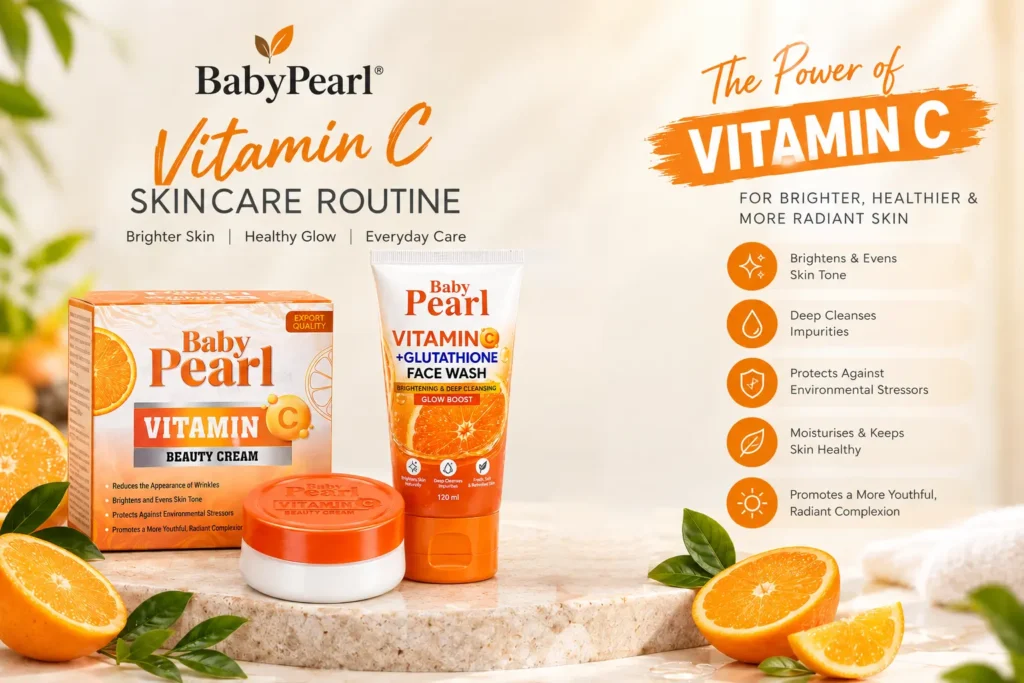
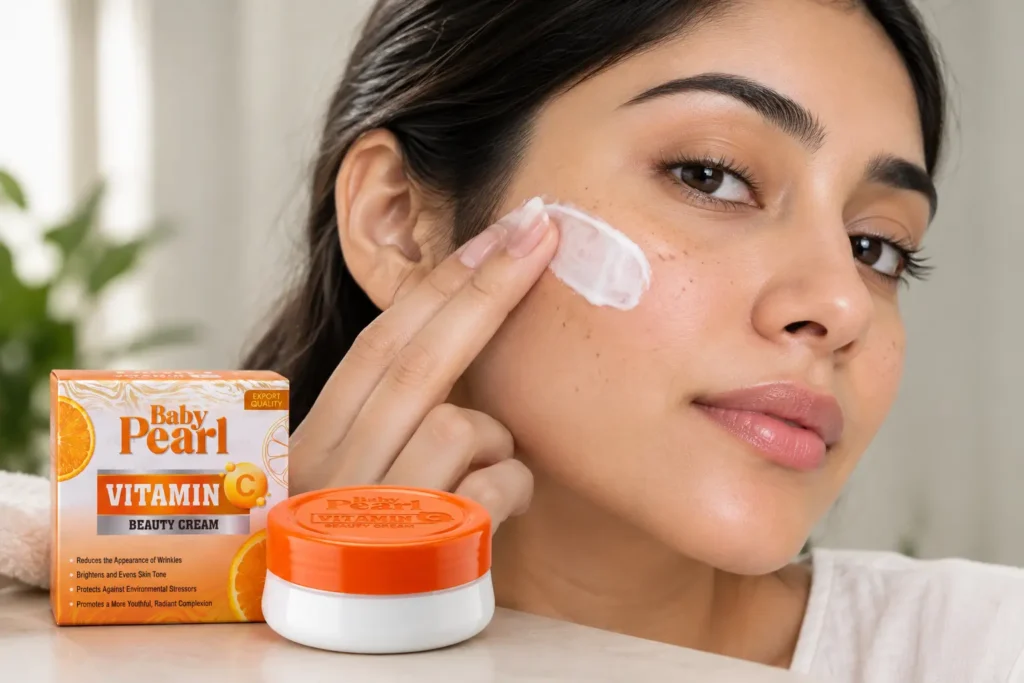
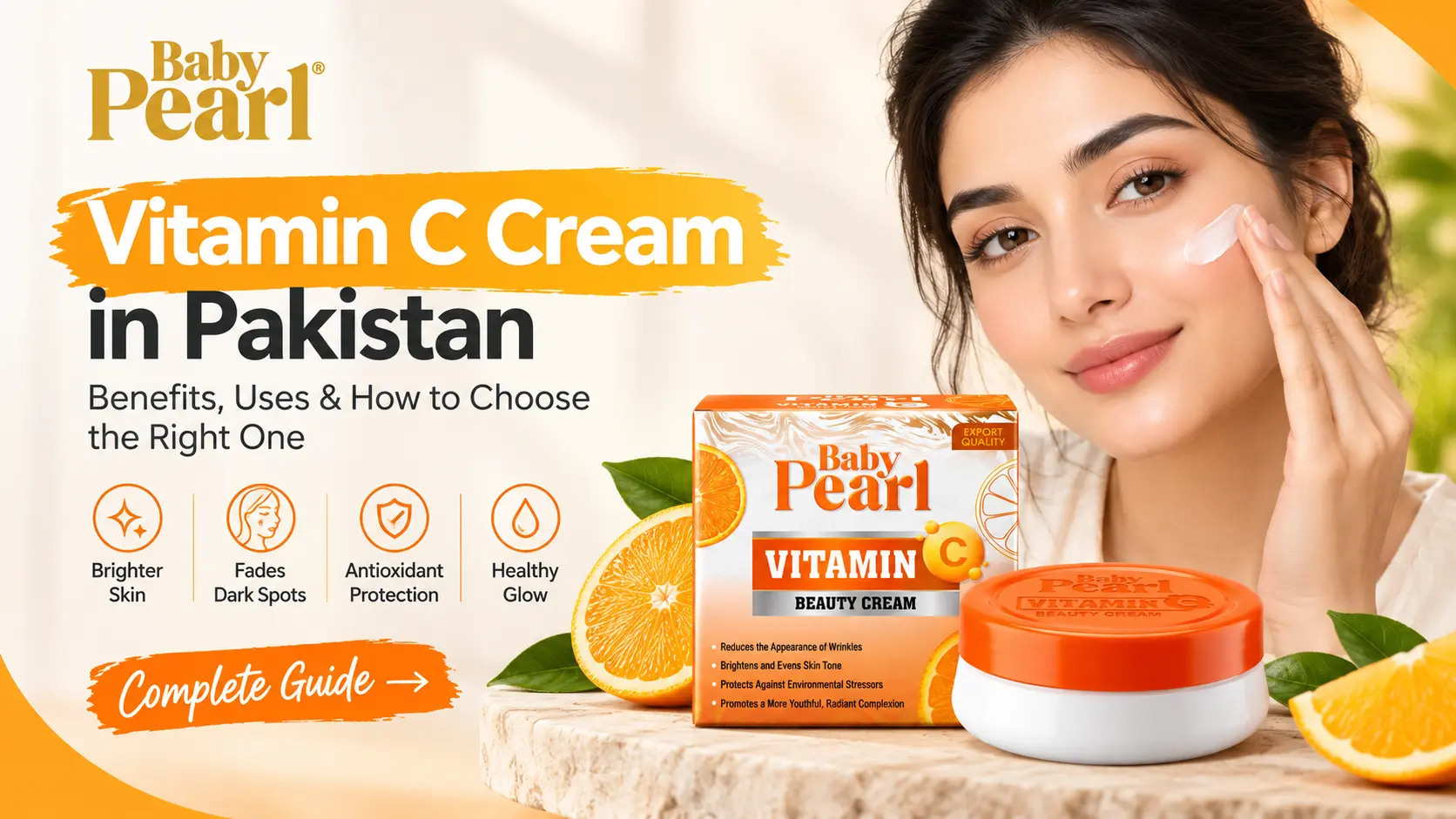
If you’re looking for a straightforward Vitamin C cream rather than adding a separate serum to your routine, BabyPearl Vitamin C Beauty Cream is one product to consider.
According to BabyPearl’s current product listing, the cream is positioned as a brightening and anti-aging face cream for dull, uneven and tired-looking skin. The product description highlights Vitamin C together with moisturizing skincare ingredients and positions the product around brighter-looking skin, a more even-looking complexion, visible wrinkle care, hydration and antioxidant care.[5]
The current BabyPearl listing highlights these intended cosmetic benefits:
- Helps brighten dull and uneven-looking skin
- Supports a smoother, more radiant complexion
- Helps reduce the visible appearance of wrinkles
- Provides hydration for softer-looking skin
- Offers antioxidant-focused skincare support
- Designed for a daily brightening and anti-aging skincare routine[5]
BabyPearl currently lists the Vitamin C Beauty Cream at Rs. 499 regular price and Rs. 450 sale price, although promotional pricing can change.[5]
If you specifically prefer a cream format and want Vitamin C-focused skincare in a simple daily routine, the product may be worth comparing against the buying checklist above.
However, product-specific claims should be kept separate from general Vitamin C research. Research on topical Vitamin C does not automatically prove that every Vitamin C product will produce the same results. Your response can also depend on the product’s formulation, skin type, tolerance and consistency of use.
What Vitamin C Cream Won’t Do
Setting realistic expectations helps avoid disappointment.
Vitamin C cream is not expected to:
- Permanently change your natural skin colour
- Clear every type of pigmentation
- Replace sunscreen
- Treat active acne by itself
- Deliver anti-aging results overnight
- Work identically across every skin type
- Guarantee results within a fixed number of days
It is better understood as a supporting skincare ingredient rather than a universal solution for every skin concern.
Common Mistakes to Avoid
- Applying too much: A thicker layer does not automatically work faster and may increase irritation.
- Skipping sunscreen: Vitamin C does not replace UV protection.
- Starting too many actives at once: This makes it difficult to identify what is causing irritation.
- Ignoring storage instructions: Heat, light and air can affect the stability of some Vitamin C formulations.
- Expecting overnight results: Consistent use matters more than changing products every few weeks.
When Should You See a Dermatologist?
If pigmentation is persistent, worsening, painful, itchy, rapidly changing or not improving with basic skincare, consider consulting a qualified dermatologist.
Different pigmentation conditions can have different causes and may require different approaches. Vitamin C is a cosmetic skincare ingredient and should not be treated as a universal solution for every type of discoloration.
Frequently Asked Questions
What is Vitamin C cream?
A topical skincare product containing Vitamin C or a Vitamin C derivative, generally used for brightening, antioxidant support and improving the appearance of uneven-looking skin.
Is Vitamin C good for dark spots?
It may help improve the appearance of some dark spots. Vitamin C can affect processes involved in melanin production, and clinical research has investigated its effect on UV-induced pigmentation[2]. However, persistent or deeper pigmentation may require a more targeted approach.
Is Vitamin C cream good for oily skin?
It can be, provided you choose a lightweight, non-greasy formulation that feels comfortable on your skin.
Is Vitamin C cream suitable for sensitive skin?
It can be suitable for some people, but certain formulations may cause stinging or redness. Patch test first and introduce the product gradually.
Can Vitamin C cream be used every day?
Many formulations are designed for regular use, but follow the specific product’s directions and increase frequency gradually if you are new to Vitamin C.
Morning or night?
Either can work. Morning use is common because Vitamin C fits naturally alongside sunscreen, but night use may be more convenient for some routines.
Can Vitamin C be used with sunscreen?
Yes. Vitamin C and sunscreen serve different purposes and can be used together in a morning routine.
Can Vitamin C be used with niacinamide?
Yes. They can be used together, although people with sensitive skin may prefer introducing them one at a time.
What Vitamin C percentage is best?
There is no universal best percentage. The Vitamin C form, formulation, stability, packaging and your skin’s tolerance all matter.
Is cream better than serum?
Neither is universally better. A cream can be convenient if you want Vitamin C-focused care with moisturization, while a serum may suit people who prefer lightweight, layerable products.
How long does Vitamin C cream take to work?
There is no fixed timeline. Brightening may be noticed earlier, while pigmentation and texture concerns generally require longer and consistent use.
Can Vitamin C cream cause irritation?
Yes. Some formulations, particularly stronger L-ascorbic acid products, may cause irritation. Combining several active ingredients can also increase the risk.
Final Thoughts
A good Vitamin C cream in Pakistan is not necessarily the product with the highest percentage or the strongest marketing claim.
Look at the Vitamin C form, formulation, packaging, skin compatibility and seller reliability. Most importantly, choose something you can use consistently.
Research supports Vitamin C’s role in antioxidant activity, brightening-related skincare and collagen-related processes[1][3]. However, the actual results you see depend on the specific formulation and how consistently you use it.
Pair your Vitamin C routine with daily sunscreen, follow the product’s storage and application instructions, and give your skincare routine enough time before judging the results.
If you prefer a cream-based Vitamin C product, BabyPearl Vitamin C Beauty Cream is one option to compare against the criteria discussed in this guide. Check the current product information and price before purchasing.
Sources
- Al-Niaimi & Chiang, Topical Vitamin C and the Skin: Mechanisms of Action and Clinical Applications, 2017.
- Vitamin C Prevents Ultraviolet-induced Pigmentation in Healthy Volunteers: Bayesian Meta-analysis Results from 31 Randomized Controlled versus Vehicle Clinical Studies.
- Ascorbic Acid Treatments as Effective and Safe Anti-Aging Options: A Review, Pharmaceutics, 2024.
- A Review of Topical Vitamin C Derivatives and Their Efficacy, Journal of Cosmetic Dermatology, 2022.
- BabyPearl, current Vitamin C Beauty Cream product listing, accessed September 2026.