Dark spots and acne marks can be frustrating, especially when they take a long time to fade. If you have been searching for a vitamin C cream for dark spots, you may be wondering whether this popular skincare ingredient can actually help or whether the claims are exaggerated.
The honest answer is that vitamin C may help improve the appearance of certain types of pigmentation over time. However, results depend on the cause of the dark spots, the formulation of the product, your skin’s tolerance, and how consistently you use it.
Vitamin C is not a bleaching agent, and it cannot guarantee that every dark spot will disappear. It is best considered a supportive skincare ingredient that may help promote a more even-looking complexion when used as part of a suitable routine.
In this guide, we explain what causes dark spots, how vitamin C may help, how to use it, and what to consider when choosing a vitamin C cream in Pakistan.
What Causes Dark Spots on the Face?
Dark spots can develop for several reasons. Understanding their cause is important because different types of pigmentation may respond differently to skincare products.
Common causes include:
- Post-acne marks: Flat brown or dark marks that remain after a pimple heals. These are often a form of post-inflammatory hyperpigmentation.
- Sun exposure: Ultraviolet (UV) exposure can contribute to excess pigmentation, particularly on areas such as the cheeks, forehead, and nose.
- Hormonal changes: Conditions such as melasma can cause persistent patches of pigmentation that may become more noticeable with sun exposure.
- Skin irritation: Picking pimples, harsh skincare products, waxing, or other irritation can sometimes leave dark marks.
- Uneven skin tone: Pigmentation can develop gradually due to a combination of sun exposure, inflammation, and individual skin characteristics.
A recent acne mark and long-standing pigmentation are not necessarily the same problem. This is one reason why a single cream may produce different results for different people.
How Does Vitamin C Help With Dark Spots?
Vitamin C is an antioxidant used in skincare. It is also studied for its potential effects on processes involved in melanin production.
Melanin is the pigment that gives skin its colour. When excess pigment develops in certain areas, it can contribute to dark spots and uneven skin tone.
Vitamin C may support a more even-looking complexion in several ways.
1. It may help improve the appearance of pigmentation
Vitamin C has been studied for its interaction with tyrosinase, an enzyme involved in melanin production. This is one reason it is commonly included in products designed for uneven skin tone.
However, the effectiveness of a product depends on its formulation and other factors. Vitamin C should not be expected to remove all pigmentation.
2. It provides antioxidant support
Vitamin C has antioxidant properties that help protect skin components from oxidative stress.
This supportive role is relevant because environmental exposure, including UV radiation, can contribute to skin damage and pigmentation concerns.
Vitamin C does not replace sunscreen, and it should not be relied on as the only form of sun protection.
3. It supports collagen production
Vitamin C is involved in normal collagen production in the skin.
Although collagen support is not the same as fading dark spots, it is another reason vitamin C is used in skincare formulations.
Overall, vitamin C is better understood as a supportive ingredient for skin appearance rather than an instant spot-removal treatment.
Does Vitamin C Cream Really Work for Dark Spots?
Vitamin C cream may help gradually improve the appearance of some dark spots, particularly certain superficial post-acne marks and mild pigmentation.
However, it is not guaranteed to work for every type of pigmentation, and it may not be sufficient for deep, persistent, or hormonally influenced dark spots.
What vitamin C may help with
- Supporting a more even-looking skin tone.
- Gradually improving the appearance of some superficial dark marks.
- Providing antioxidant support as part of a skincare routine.
- Improving the appearance of dull-looking skin.
What vitamin C cannot guarantee
- Complete removal of every dark spot.
- Fast results within a few days.
- The same results for every skin type.
- Replacement of sunscreen or professional treatment when needed.
The cause of pigmentation, the product formulation, consistent use, and sun protection all matter.
If dark spots persist despite a suitable routine, a dermatologist can help identify the cause and discuss other treatment options.
Vitamin C for Acne Marks vs. Dark Spots
People often use the terms acne marks and dark spots interchangeably. However, different marks can have different causes.
| Type of mark | What it means | Potential role of vitamin C |
|---|---|---|
| Brown post-acne marks | Pigmentation left after inflammation | May help improve appearance gradually |
| Red or pink acne marks | Residual redness after acne | Vitamin C may have a limited role |
| Sun-related brown spots | Pigmentation associated with UV exposure | May provide supportive benefits |
| Persistent or deep pigmentation | More established pigmentation | Cream alone may not be sufficient |
If your main concern is a recent brown acne mark, vitamin C may be one ingredient to consider in a consistent skincare routine.
If the pigmentation has been present for years, keeps changing, or does not improve, professional evaluation may be more appropriate than relying on skincare alone.
How Long Does Vitamin C Take to Fade Dark Spots?
There is no single timeline that applies to everyone.
Some people may notice changes in overall skin appearance before they notice a visible difference in individual dark spots. Others may see little improvement, depending on the cause and depth of pigmentation.
Several factors can affect results:
- Type and depth of pigmentation: Superficial marks may respond differently from deeper or more persistent pigmentation.
- Consistency: Regular use according to product directions matters more than occasional application.
- Sun protection: Continued UV exposure can contribute to further pigmentation.
- Product formulation: The form, stability, and concentration of vitamin C can affect how a product performs.
- Skin tolerance: Irritation may require reducing use or choosing a different formulation.
Be cautious of products promising to remove dark spots in a fixed number of days. Skincare results vary, and visible improvement is not guaranteed.
How to Use Vitamin C Cream for Dark Spots
A simple skincare routine is often easier to follow consistently than a routine with too many products.
Here is a practical way to introduce vitamin C cream.
Step 1: Cleanse your face
Use a gentle cleanser that suits your skin type. Avoid harsh scrubbing, especially if your skin is already irritated.
Step 2: Apply vitamin C cream
Follow the directions on your product. Apply an appropriate amount to clean, dry skin.
Avoid the eyes and any areas where the product is not intended to be used.
Step 3: Moisturize if needed
If your skin feels dry or tight, use a moisturizer that suits your skin type.
Step 4: Apply sunscreen during the day
Finish your morning routine with a broad-spectrum sunscreen. Follow its application directions and reapply as recommended, particularly during extended outdoor exposure.
Can you use vitamin C cream in the morning or at night?
The suitable time depends on the specific product and your routine.
Some people prefer using vitamin C in the morning as part of their antioxidant skincare routine. Others use it at night.
Follow the product instructions and choose a routine you can maintain consistently. Daily sunscreen remains important when managing pigmentation.
Should You Use Sunscreen With Vitamin C?
Yes. Sunscreen is an important part of a skincare routine for people concerned about dark spots.
UV exposure can contribute to pigmentation and may make existing marks more noticeable. Vitamin C does not provide sufficient protection against UV radiation on its own.
A broad-spectrum sunscreen helps protect skin from further sun-related damage. Use a sunscreen suitable for your skin and follow its application and reapplication instructions.
This is particularly relevant in Pakistan, where many people experience strong sunlight during outdoor activities.
Remember: vitamin C and sunscreen have different roles. Vitamin C may provide antioxidant support, while sunscreen helps protect against UV exposure.
How to Choose a Vitamin C Cream for Dark Spots
Not all vitamin C creams are formulated in the same way. Before choosing a product, consider the following factors.
1. Check the form of vitamin C
L-ascorbic acid is a well-studied form of vitamin C. Other derivatives are also used in skincare formulations.
Different forms can vary in stability, formulation requirements, and skin tolerance.
2. Review the ingredient list
Check the product’s ingredient list and look for clear information about its formulation.
Do not assume that every product marketed as a vitamin C cream contains the same form or concentration of vitamin C.
3. Consider packaging and storage
Vitamin C can be sensitive to environmental conditions, including light and air, depending on its form and formulation.
Follow the product’s storage instructions and pay attention to changes in colour, smell, or texture.
4. Choose a suitable texture
Skin types differ.
- Oily skin may prefer a lighter texture.
- Dry skin may benefit from a more moisturising formula.
- Sensitive skin may need a gentler product and a slower introduction.
A cream that feels comfortable on one person’s skin may not suit someone else.
5. Avoid exaggerated claims
Be cautious of products promising instant fairness, permanent whitening, or guaranteed removal of all dark spots.
A trustworthy product description should provide clear ingredient information and realistic expectations.
For a broader explanation of vitamin C skincare and product selection, read our guide to Vitamin C Cream in Pakistan: Benefits, Uses & How to Choose the Right One.
BabyPearl Vitamin C Beauty Cream: Where It Fits
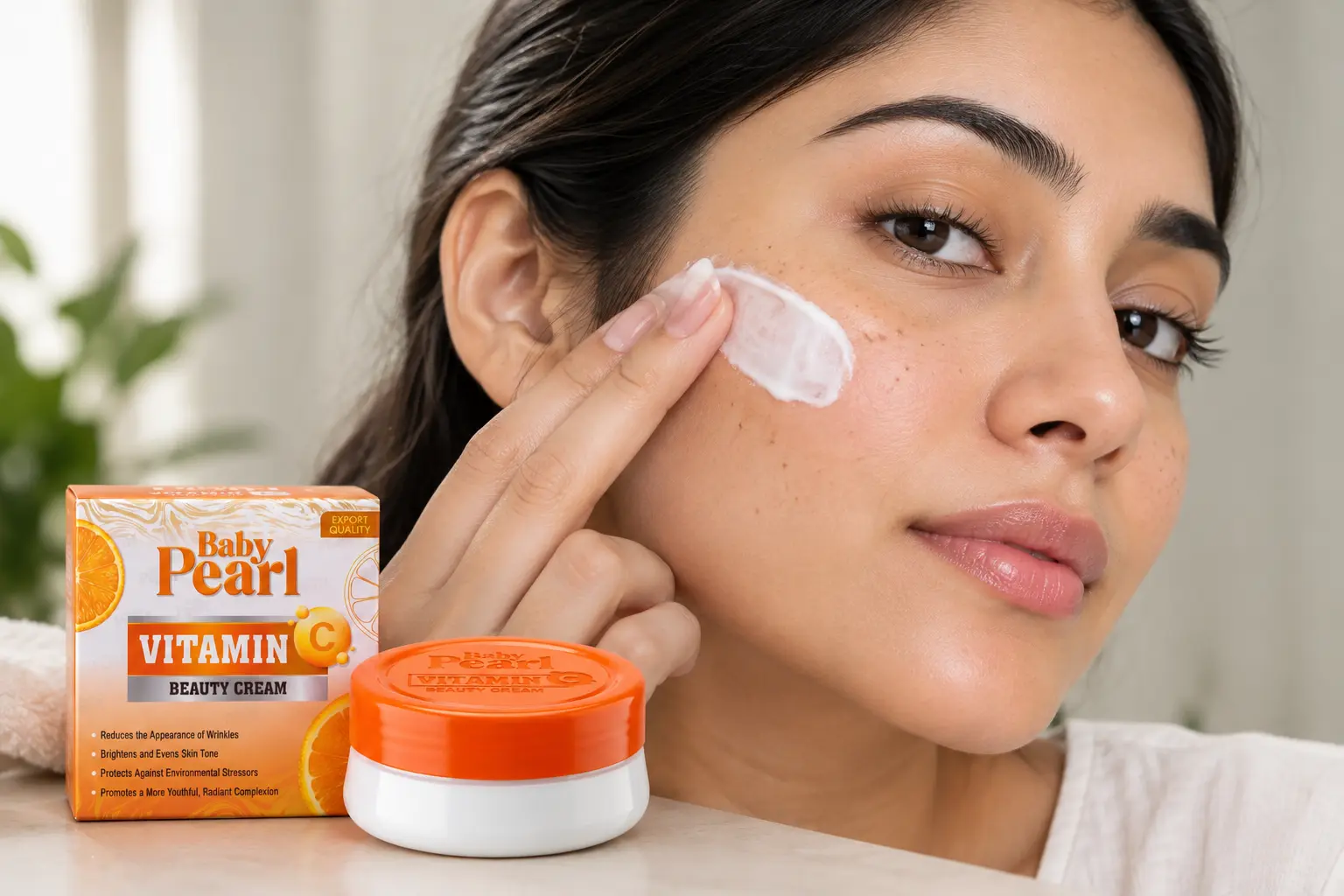
If you are exploring vitamin C skincare products, you can review BabyPearl Vitamin C Beauty Cream and check its current product details and ingredient information.
When choosing any skincare cream, consider whether its ingredients and texture suit your skin type and whether it fits comfortably into your routine.
Vitamin C should not be treated as an overnight solution for dark spots. Consistent use, realistic expectations, and appropriate sun protection remain important.
Before using a new product, review its directions and ingredient list. If you have sensitive skin, consider patch testing before applying it more widely.
Common Mistakes When Using Vitamin C for Dark Spots
A few common mistakes can make a skincare routine less comfortable or less effective.
Expecting instant results
Dark spots may take time to improve, and some may not respond to vitamin C alone.
Skipping sunscreen
Without adequate sun protection, further UV-related pigmentation can develop.
Using too many active ingredients together
Combining several strong skincare ingredients at once may increase the risk of irritation.
Introduce new products gradually and pay attention to how your skin responds.
Applying more cream than recommended
Using extra product does not guarantee faster results. Follow the product’s directions.
Ignoring irritation
If you experience persistent burning, redness, itching, or discomfort, stop using the product and seek appropriate advice if symptoms continue.
Choosing a product without checking its ingredients
Review the ingredient list and product instructions before adding a cream to your routine.
When Vitamin C May Not Be Enough
Not every dark spot is caused by the same condition, and not every pigmentation concern can be managed with an over-the-counter cream.
Consider consulting a dermatologist if:
- Pigmentation is persistent or worsening.
- Dark patches continue to return.
- You are unsure what is causing the pigmentation.
- A product causes ongoing irritation.
- A spot is new, changing in shape or colour, raised, or otherwise unusual.
A dermatologist can assess the concern and explain whether skincare or another treatment approach may be appropriate.
This article provides general skincare information and is not a substitute for individual medical advice.
Final Thoughts
Vitamin C cream may help improve the appearance of certain dark spots and uneven skin tone over time, but it is not a guaranteed treatment for every type of pigmentation.
The most useful approach is to understand what may be causing your dark spots, choose a suitable product, follow its directions, and use sunscreen consistently.
If pigmentation is deep, persistent, or changing, professional advice can help you understand your options.
Patience, consistency, and realistic expectations are more helpful than expecting an overnight transformation.
Frequently Asked Questions
Does vitamin C cream remove dark spots?
Vitamin C cream may help improve the appearance of some dark spots gradually. However, it does not guarantee complete removal, particularly for deep or persistent pigmentation.
Is vitamin C good for pigmentation?
Vitamin C is commonly used in skincare products designed for uneven skin tone. Its results depend on the formulation and the type of pigmentation.
Can vitamin C fade acne marks?
It may help improve the appearance of certain flat, brown post-acne marks over time. Red or pink marks may have a different cause and may respond differently.
How long does vitamin C take to work on dark spots?
There is no fixed timeline. Results vary according to the cause of pigmentation, product formulation, skin tolerance, and sun protection habits.
Can I use vitamin C cream every day?
Some vitamin C creams are designed for daily use. Follow the product instructions and reduce use or stop if irritation develops.
Should I use sunscreen after vitamin C?
Yes. Sunscreen helps protect against UV exposure, which can contribute to pigmentation. Vitamin C is not a replacement for sunscreen.
Is vitamin C suitable for oily skin?
It may suit oily skin, depending on the formulation and texture. Choose a product that feels comfortable and does not cause irritation.
Can vitamin C irritate sensitive skin?
Yes. Some formulations may cause irritation, particularly on sensitive skin. Patch testing and introducing a product gradually may help identify whether it suits you.
Can I use vitamin C with other skincare ingredients?
It depends on the ingredients and your skin’s tolerance. Introducing several strong active ingredients together may increase irritation risk, so a simple routine is often easier to manage.
What should I look for in a vitamin C cream?
Check the form of vitamin C, ingredient list, packaging, product directions, and suitability for your skin type. Avoid relying on exaggerated claims about instant or permanent results.