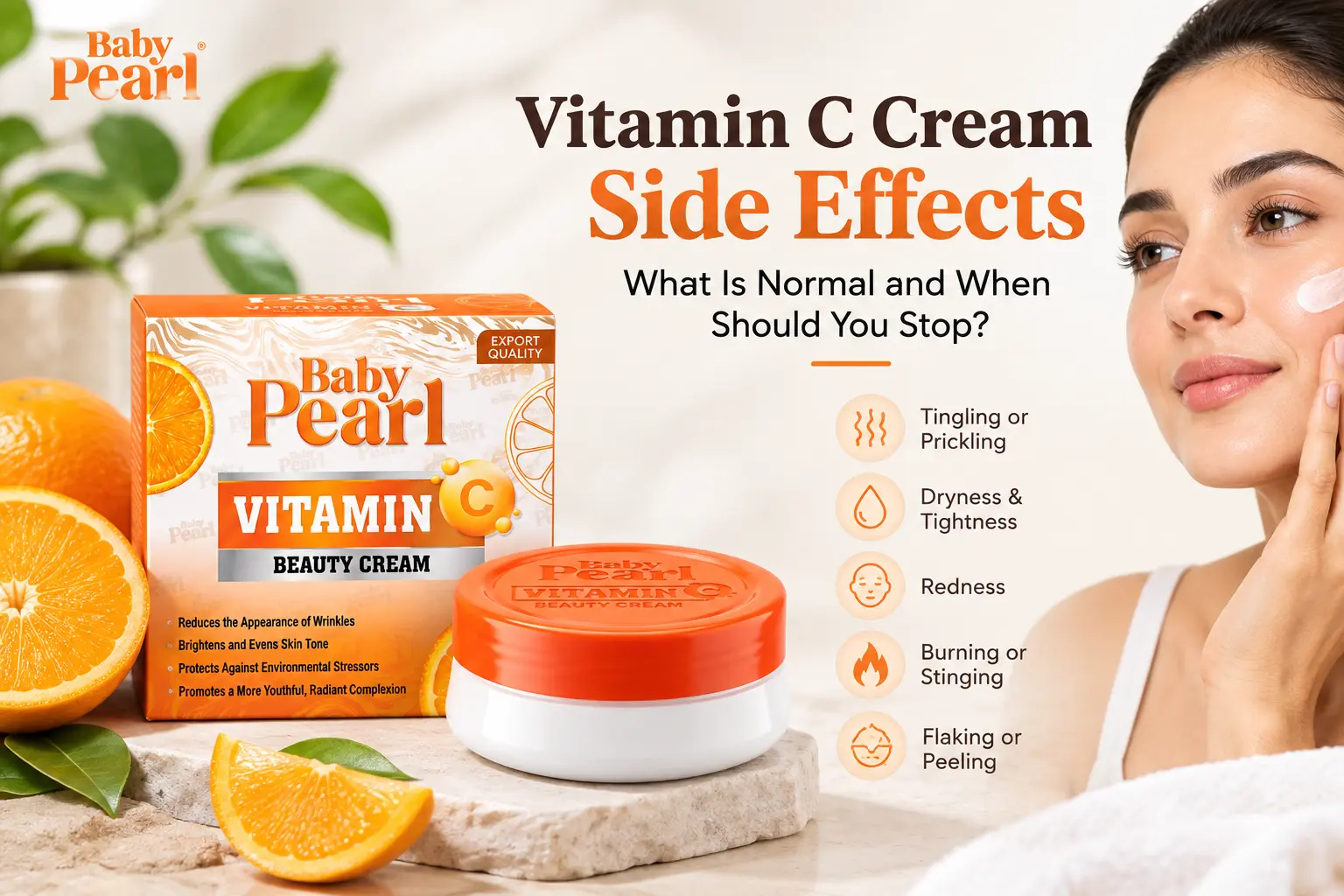
Trying a new vitamin C cream can sometimes leave your skin feeling warm, tight or slightly prickly. For some people, this may be temporary irritation; for others, it can be a sign that the product isn’t agreeing with their skin. That’s why understanding vitamin C cream side effects matters before deciding whether to continue using it.
Vitamin C, usually listed as ascorbic acid or one of its derivatives, is a popular skincare ingredient. Topical vitamin C has been studied for its antioxidant and skin-brightening properties, but how well it works and how comfortable it feels can depend on the formulation, concentration, pH and type of vitamin C used.
This guide explains what mild irritation can look like, which symptoms should not be ignored, and how to use vitamin C cream more carefully.
What Are the Common Vitamin C Cream Side Effects?
Most reactions to vitamin C cream are related to skin irritation and may affect only the area where the product was applied. Possible symptoms include:
- Mild tingling or prickling shortly after application
- Temporary dryness or tightness
- Mild pinkness or redness
- Stinging or discomfort
- Light flaking or peeling
Not everyone experiences these effects, and many people use topical vitamin C without significant problems. Your response can depend on the form and concentration of vitamin C, the rest of the formula, your skin type, and how often you use it.
For example, a gentle product used occasionally may feel very different from a stronger low-pH vitamin C formula applied frequently. L-ascorbic acid formulations are often designed at a lower pH to support skin penetration, but that type of formulation may be more irritating for some people.
So, one person’s comfortable experience and another person’s irritation can both happen with vitamin C products.
Is Mild Tingling After Using Vitamin C Cream Normal?
A mild, short-lived tingling sensation can occur with some active skincare products, particularly when your skin is new to the ingredient or already feeling sensitive.
The important thing is to pay attention to how strong the sensation is and what happens afterwards.
Tingling deserves more caution when it:
- Feels more like burning than a light tingle
- Continues for a long time after application
- Becomes stronger each time you use the product
- Comes with significant redness, itching or swelling
- Leaves your skin painful, raw or visibly damaged
If the product causes more than mild, temporary discomfort, don’t assume that your skin simply needs to “get used to it.” Pausing the product and allowing your skin to settle is a safer approach.
Can Vitamin C Cream Cause Redness?
Yes. Vitamin C products can cause redness or irritation in some people. Mild, temporary pinkness may settle after application, but persistent or worsening redness deserves more attention.
Redness is more concerning when it:
- Appears together with burning or significant itching
- Comes with swelling
- Continues for hours or repeatedly returns after application
- Spreads beyond the area where the product was used
- Is accompanied by a rash, hives or blistering
Several factors can contribute to redness. The formula may be too strong for your skin, you may be using it too frequently, or your skin barrier may already be irritated from dryness, shaving, sun exposure or other skincare products.
The reaction may also be caused by another ingredient in the formula rather than vitamin C itself.
If you develop noticeable redness, pause the cream and keep the rest of your routine simple. If the reaction does not improve or continues to get worse, consider speaking with a dermatologist.
Why Does Vitamin C Cream Burn or Sting?
Burning and stinging usually suggest that the skin is being irritated. There isn’t one single explanation, and the cause can vary from product to product.
The formula has a low pH
Some products containing L-ascorbic acid are formulated at a low pH because acidity can support the ingredient’s penetration into the skin. However, lower-pH formulations can also be harder for some sensitive skin to tolerate.
The concentration may be too strong for your skin
A higher concentration isn’t automatically better for everyone. A stronger formula may also be more difficult for some people to tolerate, particularly when it is introduced too quickly or combined with other active ingredients.
Your skin barrier may already be irritated
Dry, flaky, sunburned or over-exfoliated skin can be more uncomfortable when another active product is applied.
Another ingredient may be responsible
Fragrance, preservatives, alcohol or other active ingredients in the formula can also contribute to irritation. A reaction isn’t necessarily caused by vitamin C alone.
If you experience strong burning or significant discomfort, rinse the product off with lukewarm water and stop using it until your skin has recovered.
Can Vitamin C Cream Cause Dryness or Peeling?
It can. Dryness and light flaking may occur when the skin doesn’t tolerate a product well, particularly if you’re using several active ingredients at the same time.
Possible contributing factors include:
- Using vitamin C too frequently
- Combining several potentially irritating actives
- Starting with a stronger formula
- Applying the product to already dry or irritated skin
- Using other products that are also drying
If your skin becomes tight or mildly flaky, consider pausing vitamin C and keeping the rest of your routine simple.
A gentle cleanser and a basic moisturiser may be enough while your skin settles. Avoid adding scrubs, exfoliating acids, retinoids or other strong actives while the skin is irritated.
If peeling becomes severe, painful, cracked or persistent, stop the product and seek professional advice.
Who Is More Likely to Experience Irritation?
Anyone can react to a skincare product, but certain situations may make irritation more likely.
Sensitive skin
If your skin reacts easily to new products, introduce vitamin C gradually and consider choosing a formulation designed with your skin’s tolerance in mind.
A weakened skin barrier
Skin that is very dry, sunburned, over-exfoliated or already irritated may tolerate active ingredients less comfortably.
Starting too quickly
Using a new active every day from the beginning may give your skin little time to adjust.
Combining several actives
Using vitamin C alongside exfoliating acids, retinoids or other potentially irritating products can make the overall routine harder to tolerate.
Using too much product
Applying a thicker layer doesn’t necessarily produce better results. Follow the amount recommended on the product packaging.
Choosing a formulation your skin cannot tolerate
Vitamin C comes in different forms and formulations. L-ascorbic acid, for example, is commonly used in acidic formulations, while other vitamin C derivatives may have different stability and formulation characteristics.
For sensitive skin, a slower introduction and careful monitoring can be more useful than simply choosing the strongest product available. If you’re comparing different vitamin C products, you can also learn more about how to choose the right vitamin C cream.
Vitamin C Cream Irritation vs. Allergic Reaction
Irritation and an allergic reaction are not exactly the same thing.
Irritation may cause symptoms such as:
- Stinging
- Burning
- Dryness
- Tightness
- Redness
- Flaking
These symptoms usually affect the area where the product was applied.
An allergic reaction can involve symptoms such as:
- Intense itching
- Hives
- Significant swelling
- A spreading rash
- Swelling around the eyes, lips or face
A reaction can also be caused by another ingredient in the product rather than vitamin C itself.
If you experience swelling of the face, lips or tongue, difficulty breathing, or another rapidly developing severe reaction, seek urgent medical care.
When Should You Stop Using Vitamin C Cream?
This is the most important part to understand.
A mild, temporary sensation may not necessarily mean you need to stop permanently. However, stronger or persistent symptoms are a reason to pause the product rather than push through them.
Stop using the cream if you notice:
- Strong burning or stinging
- Redness that persists or keeps getting worse
- Intense or spreading itching
- Noticeable swelling
- Hives or a spreading rash
- Blisters
- Oozing or crusting
- Severe peeling or painful cracking
- A reaction that repeatedly returns whenever you use the product
Don’t automatically treat these symptoms as “purging” or assume that your skin is simply adjusting.
Vitamin C is not generally considered an ingredient that commonly causes the type of purging associated with ingredients that increase skin cell turnover. If your skin repeatedly burns, becomes very red or develops a rash after applying vitamin C, irritation or another type of reaction should be considered instead.
Seek urgent medical help if you develop difficulty breathing or swelling of the lips, tongue or face.
If the irritation remains significant after stopping the product, keeps spreading, or you are unsure what caused it, speak with a dermatologist or another qualified healthcare professional.
What Should You Do If Vitamin C Cream Irritates Your Skin?
If your skin has reacted, the goal is to remove the likely trigger and give your skin time to settle.
1. Stop or pause the product
If the reaction is more than mild, stop using the vitamin C cream. If product is still sitting on your skin and causing discomfort, rinse it off gently with lukewarm water.
2. Keep your routine simple
Use a gentle cleanser and a basic moisturiser if needed. Avoid introducing additional skincare products while your skin is irritated.
3. Avoid other strong actives
Pause exfoliating acids, retinoids, scrubs and other potentially irritating treatments until your skin feels comfortable again.
4. Be gentle with your skin
Avoid hot water, aggressive rubbing and harsh cleansing.
5. Give your skin time to recover
There is no exact recovery period that applies to everyone. Mild irritation may improve after the product is stopped, while stronger reactions can take longer.
6. Get professional advice if needed
If symptoms are severe, persistent, spreading or difficult to understand, speak with a dermatologist.
Once your skin has completely settled, you can decide whether to try vitamin C again at a lower frequency or with a different formulation. If the same reaction happens again, continuing to use that product may not be appropriate.
How to Use Vitamin C Cream Safely
A few simple habits can reduce the chance of unnecessary irritation.
Patch test first
Before applying a new product across your face, test a small amount on a discreet area of skin and monitor for a reaction.
A home patch test is not a guarantee that a product will never cause a reaction on your face, but it can help you identify obvious problems before applying the product more widely.
If you have a history of strong allergic reactions or ongoing skin problems, ask a dermatologist about appropriate testing rather than relying only on a home test.
Start slowly
If the product instructions allow it, begin with less frequent use and increase gradually if your skin remains comfortable.
You do not need to reach daily use immediately.
Use a small amount
Apply the amount recommended by the product instructions. Using more product does not necessarily mean better results.
Avoid broken or irritated skin
Do not apply vitamin C cream over cuts, active irritation, sunburn or recently damaged skin.
Introduce one new active at a time
If you introduce vitamin C and several other new products together, it becomes much harder to identify which product caused a reaction.
Follow the product instructions
Different vitamin C products use different forms, concentrations and formulations. Follow the instructions provided with the specific product rather than assuming every vitamin C cream should be used in exactly the same way.
If you want to learn more about application order and timing, see our guide on how to use vitamin C cream correctly.
Wear sunscreen during the day
Broad-spectrum sunscreen is an important part of daytime skincare because it helps protect the skin from UV exposure. Sunscreen is not a treatment for irritation, however. If your skin is already reacting to vitamin C, pause the product rather than trying to compensate with sunscreen.
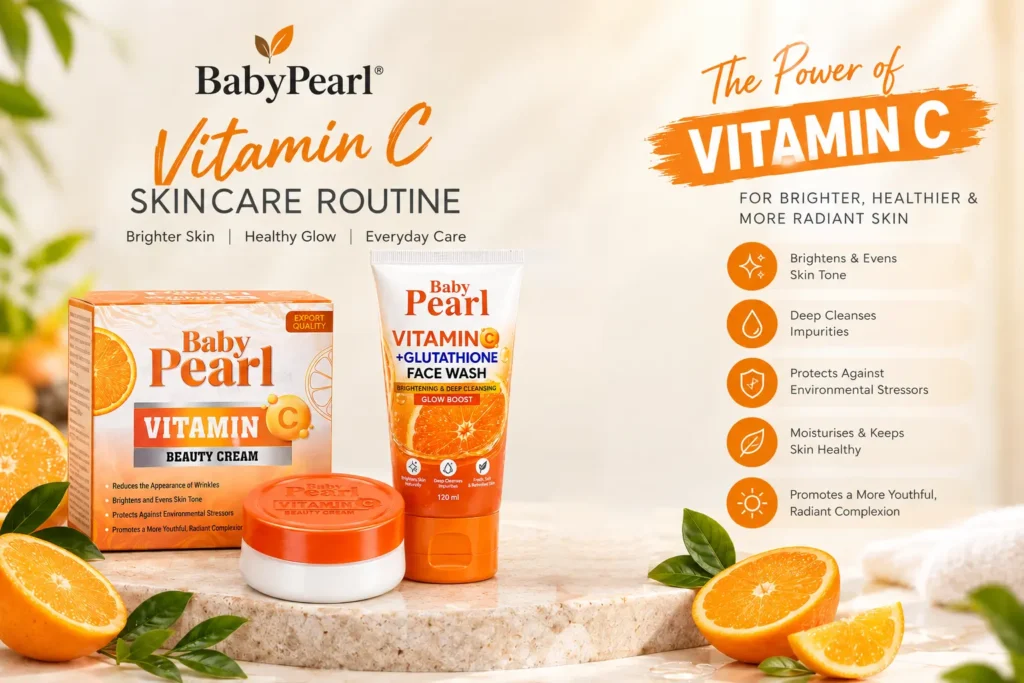
If you’re choosing a vitamin C cream and want something to compare, the BabyPearl Vitamin C Beauty Cream is one option. Whatever product you choose, check its ingredient list and usage instructions and introduce it carefully, since any skincare product can irritate some people.
Can You Use Vitamin C Cream Every Day?
Some people can use vitamin C regularly, while others may need to use it less often. There is no single frequency that works for every person or every formulation.
How often you should use a vitamin C cream depends on factors such as:
- The type of vitamin C
- The concentration
- The formulation
- Your skin type
- Your existing skincare routine
- How your skin responds over time
A cautious approach is to start less frequently and increase gradually if your skin remains comfortable and the product instructions support more frequent use.
If you notice increasing dryness, stinging or redness, reduce the frequency or pause the product.
Daily use is not a goal by itself. Consistent use that your skin tolerates is more practical than frequent use that leaves your skin irritated.
For readers interested in the benefits and selection of vitamin C products, our guide on how to choose the right vitamin C cream covers the main factors to consider when comparing products.
If your main concern is pigmentation or dark spots, you can also read our guide to vitamin C for dark spots.
Vitamin C Cream Side Effects FAQs
1. Can vitamin C cream cause skin irritation?
Yes. Like other active skincare ingredients, vitamin C can cause irritation in some people. The likelihood can depend on the formulation, concentration, skin sensitivity and how frequently the product is used. Some people use vitamin C without experiencing noticeable irritation.
2. Is tingling after applying vitamin C cream normal?
A mild, short-lived tingling sensation can occur with some active skincare products. If it becomes painful, turns into strong burning, lasts for a long time, or occurs together with significant redness or swelling, stop using the product.
3. Can vitamin C cream cause redness?
It can. Mild, temporary redness may occur in some people, but redness that persists, spreads, worsens or appears with itching, swelling or a rash is a reason to stop using the product and consider professional advice.
4. Can vitamin C cream burn your skin?
Strong burning is not something to ignore. If a vitamin C product causes significant burning, rinse it off and stop using it. If blistering, severe pain or other serious symptoms develop, seek medical advice.
5. Should I stop using vitamin C cream if my skin becomes dry?
If the dryness is mild, you may be able to improve tolerance by reducing how often you use the product and keeping the rest of your routine gentle. If your skin becomes very tight, painful, cracked or severely flaky, pause the product until the skin recovers and consider speaking with a professional.
6. Can sensitive skin use vitamin C cream?
Some people with sensitive skin can tolerate vitamin C, but they may need to introduce it more carefully. A suitable formulation, a cautious start and attention to your skin’s response can help. If you have an existing skin condition or a history of strong reactions, ask a dermatologist for personalised advice.
7. How often should beginners use vitamin C cream?
There is no universal schedule. A cautious approach is to begin with less frequent use and increase gradually if your skin remains comfortable and the product instructions allow it.
8. When should I see a dermatologist after using vitamin C?
Consider seeing a dermatologist if irritation is severe, persistent or keeps returning after you stop the product. Professional advice is also appropriate if you develop significant swelling, hives, blisters or a spreading rash.
Seek urgent medical care if you develop difficulty breathing or swelling of the face, lips or tongue.
Final Takeaway
Vitamin C can be a useful addition to a skincare routine, but not every formulation will feel the same on every person’s skin. Mild, short-lived tingling or dryness can occur with some products, while strong burning, persistent redness, swelling, hives, blistering or a spreading rash should not be treated as normal adjustment.
If your skin reacts, stop or reduce the product as appropriate, keep the rest of your routine simple, and give your skin time to settle. Introduce new vitamin C products gradually, follow their specific instructions and avoid applying them to already irritated skin.
Most importantly, don’t feel that you have to continue using a product simply because it is an active ingredient or because you expect your skin to “get used to it.” If something repeatedly causes a significant reaction, it may not be the right product for your skin.