Walk into any cosmetics shop or scroll through an online store, and you will find dozens of vitamin C creams. The jars look alike. The front labels promise glow, brightness and an even-looking tone. If you are wondering how to choose a vitamin C cream, there are a few important things to check before buying.
The honest answer is that the front of the pack tells you very little. The useful information is usually in the ingredient list, directions, storage instructions, product details and small print near the bottom.
This guide explains how to choose a vitamin C cream by reading the label properly, comparing formulas and checking the information that matters before you buy. If you are looking for a vitamin C cream in Pakistan, these checks can help you compare products based on information rather than marketing claims.
Why Reading a Vitamin C Cream Label Matters
Vitamin C is one of the most talked-about ingredients in skincare, and that popularity is exactly why product labels can sometimes be confusing. A cream may carry “Vitamin C” in large letters while the ingredient list tells a more detailed story. Another cream may have a simple-looking pack but a clearly explained formula and directions.
Reading the label helps you answer three practical questions:
- What is actually in this cream?
- What is the product designed to do?
- Can I understand how it should be used, stored and identified?
If you want a broader introduction to vitamin C, read our guide on [Vitamin C Cream in Pakistan: Benefits, Uses & How to Choose the Right One]. This article focuses specifically on the label and the practical checks you should make before buying.
What to Look for in a Vitamin C Cream
1. Check the Vitamin C Ingredient
When learning how to choose a vitamin C cream, start with the ingredient list rather than the front of the box.
Vitamin C can appear under several names, including:
- Ascorbic acid
- Sodium ascorbyl phosphate
- Magnesium ascorbyl phosphate
- Ascorbyl glucoside
- 3-O-ethyl ascorbic acid
These are different forms of vitamin C and can behave differently in a formulation. Some forms are more sensitive to air, light and heat, while others are used with the aim of improving stability or tolerability.
You do not need to memorise every form. The important point is to check whether the product clearly identifies the vitamin C ingredient rather than relying only on a large “Vitamin C” claim on the front of the package.
Is a Higher Vitamin C Percentage Always Better?
No.
Many shoppers assume that a higher percentage automatically means a better vitamin C cream. It does not.
The concentration is only one part of the formula. The form of vitamin C, formulation, stability, supporting ingredients, packaging and your own skin tolerance can all affect how suitable a product is for you.
If a brand clearly states a percentage, you can consider it as part of your comparison, but do not make the percentage your only deciding factor.
2. Look at the Supporting Ingredients
A vitamin C cream is more than vitamin C.
Other ingredients can influence the texture, hydration and overall feel of the product.
Common supporting ingredients include:
- Glycerin and hyaluronic acid for hydration
- Niacinamide in formulas focused on uneven-looking skin tone
- Vitamin E and other antioxidants in antioxidant-focused formulations
- Panthenol and conditioning ingredients for skin comfort
- Plant extracts used for additional cosmetic benefits
Look for a combination that fits your reason for buying.
If your skin often feels dry or tight, a formula containing moisturising ingredients may feel more comfortable. If you already use several active skincare products, a simpler routine may be easier to manage.
3. Check What the Product Is Designed For
Read the purpose statement on the pack or product page.
Is it described as:
- A brightening cream?
- A moisturising cream?
- An anti-aging cream?
- A cream for dull-looking skin?
- A product for uneven-looking skin tone?
These descriptions are not necessarily interchangeable.
Be cautious about dramatic wording such as:
- “Instant whitening”
- “Permanent results”
- “Removes all marks”
- “Works for everyone”
- “Guaranteed results”
Reasonable skincare claims are generally more specific and measured. A product can be designed to help skin look brighter, more hydrated or more even-looking without promising a permanent transformation.
4. Read the Directions for Use
A good product label should explain how the cream is intended to be used.
Look for:
- When to apply it
- How much to use
- Whether to apply it to clean skin
- Whether the eye area should be avoided
- Any patch-testing recommendation
- Any warnings or precautions
Directions also help you understand how the product fits into your routine.
If you cannot find clear directions on the product or its official listing, that is worth considering before purchasing.
5. Check the Packaging and Storage Instructions
Packaging matters because some forms of vitamin C can be sensitive to environmental conditions such as light, air and heat.
Check whether:
- The container is properly sealed.
- The product is protected from excessive light.
- The packaging limits unnecessary air exposure.
- Storage instructions are clearly provided.
Tubes and pump-style packaging can reduce repeated exposure to air compared with a wide jar that is opened and touched frequently. That does not automatically make a jar unsuitable, but packaging is worth considering when comparing vitamin C products.
Follow the manufacturer’s storage instructions and avoid unnecessary exposure to heat and direct sunlight.
6. Check the Size, Batch and Expiry Information
Look for:
- Net weight or volume
- Batch number
- Manufacturing information where provided
- Expiry or best-before information
- Period-after-opening information where applicable
These details help you identify the product and determine whether it is still within the recommended use period.
If important information is missing or unclear, ask the seller or choose a product with clearer labelling.
Size also matters when comparing price. A cheaper small jar may not necessarily be better value than a larger product.
Compare the quantity as well as the price.
7. Look for Clear Manufacturer and Product Information
A trustworthy product should make it reasonably easy to identify the brand and product.
Look for:
- Brand name
- Product name
- Manufacturer or responsible company information
- Contact information
- Website or other customer-support details
- Batch information
- Expiry information
Be cautious of products with no clear brand information or packaging that appears blurred, inconsistent or poorly printed.
The seller also matters. Buying from an official brand website or a reliable retailer can make it easier to address questions about authenticity, storage, returns or product information.
How to Choose a Vitamin C Cream for Your Skin Needs
Once you understand the label, The next step in how to choose a vitamin C cream is matching the product to your skin needs.
These are general skincare pointers, and individual skin can respond differently.
If Your Main Concern Is Dullness
Look for a vitamin C cream that also contains moisturising ingredients.
Dull-looking skin and dryness can occur together, so a comfortable formula that supports hydration may be easier to use consistently.
Do not assume that a stronger product will automatically produce faster results. Consistent use matters.
If You Are Concerned About Dark Spots
Vitamin C is commonly used in skincare routines focused on uneven-looking skin tone and the appearance of some dark spots.
However, it is not a guaranteed quick fix.
Look for realistic product claims and avoid products promising to permanently erase pigmentation.
If pigmentation is persistent, rapidly changing, painful, itchy or otherwise unusual, consider speaking with a qualified dermatologist.
You can also read our guide on vitamin C cream for dark spots for a more focused discussion of expectations and skincare considerations.
Whatever cream you choose, daily sunscreen is important when pigmentation and sun exposure are concerns. Vitamin C does not replace sunscreen.
If Your Skin Is Sensitive
Choose a formula that your skin can tolerate.
If fragrance bothers your skin, consider avoiding heavily fragranced products. Patch testing can also help you identify whether a new product is likely to cause a reaction.
If you are new to vitamin C, start gradually rather than introducing several new active products at the same time.
Rather you experience significant or persistent redness, burning, swelling or itching, stop using the product and seek professional advice.
If You Want a Simple Daily Skincare Product
You do not need a complicated ten-step skincare routine.
A simple routine can include:
- Gentle face wash
- Vitamin C cream
- Sunscreen during the daytime
If you already use a serum or moisturiser, adjust the routine according to the products you already have and the directions on each product.
How to Compare Two Vitamin C Creams Before Buying
When two products look equally appealing, put them side by side and compare the information rather than the packaging design.
| What to Check | What a Clear Label Looks Like | Why It Matters |
|---|---|---|
| Vitamin C form | Named in the ingredient list | Shows which form is used |
| Supporting ingredients | Clearly identified ingredients | Helps you assess hydration and formulation |
| Product purpose | Specific, realistic wording | Helps identify exaggerated claims |
| Directions | Clear instructions | Helps reduce misuse |
| Packaging | Sealed and practical | Can help protect the formula |
| Storage advice | Clearly stated | Important in warm conditions |
| Size | Net weight or volume shown | Helps compare value |
| Batch information | Clearly printed | Helps identify the product |
| Expiry | Clearly visible | Helps confirm product status |
| Brand details | Brand and contact information | Makes the product easier to verify |
| Seller | Reliable or official source | Can reduce the risk of poor storage or counterfeit products |
If a product is missing several of these basic details, consider that information before buying.
Red Flags to Watch for When Choosing a Vitamin C Cream
Be cautious when choose vitamin c cream if you notice:
- No ingredient list
- An ingredient list that is difficult to read
- Claims such as “works for everyone”
- Guaranteed results
- Permanent whitening claims
- Instant pigmentation removal claims
- No expiry information
- No batch information
- No clear brand or contact details
- Broken or damaged packaging
- A leaking or visibly separated product
- A significant unexplained change in colour, smell or texture
- A price far below comparable products without a clear reason
- A seller who cannot explain where the product came from or how it was stored
- No clear directions for use
One red flag does not automatically prove that a product is unsafe, but several together are a good reason to choose another product.
What to Consider When Buying Vitamin C Cream in Pakistan
Shopping for vitamin C cream in Pakistan has a few practical considerations.
Heat and Storage
Pakistan experiences hot weather in many regions and seasons. Products may also spend time in warehouses, delivery vehicles or shop environments.
Because some vitamin C formulations can be affected by heat, light and air, follow the manufacturer’s storage instructions.
At home, keep your cream in a cool, dry place away from direct sunlight.
Avoid leaving it:
- In a hot car
- On a sunny windowsill
- Near a hot appliance
- In a steamy bathroom
Close the container properly after every use.
Counterfeits and Unclear Sources
Popular skincare products can be copied or sold through unreliable sources.
Where possible, buy from:
- The brand’s official website
- An established retailer
- A trusted seller
When your product arrives, check the packaging, seal, printed information, batch details and expiry information.
Marketing Versus the Ingredient List
Words such as “glow”, “whitening”, “brightening” and “fairness” can attract attention.
Do not choose a product based on those words alone.
Turn the package around and examine the ingredient list, directions and product information.
Price and Size
Compare both price and quantity.
A low-priced small jar may not necessarily provide better value than a larger product.
Consider the formula, quantity, packaging and suitability for your skin rather than price alone.
Sunscreen
If your skincare routine focuses on dullness, uneven-looking skin tone or dark spots, sunscreen should be part of your daytime routine.
Vitamin C can provide antioxidant support, but it is not a substitute for UV protection.
BabyPearl Vitamin C Beauty Cream: Applying the Checklist
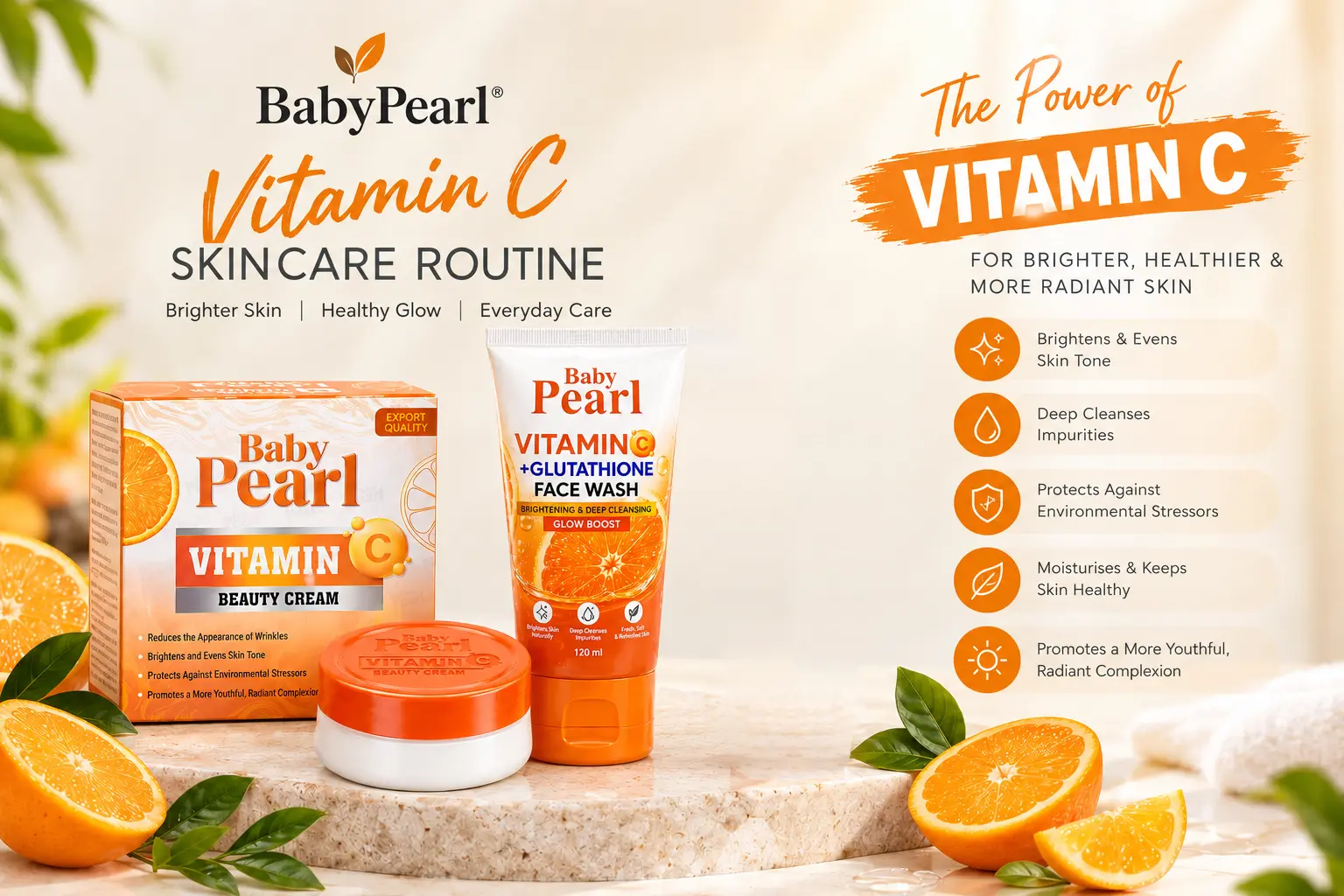
If you want a real product example, you can apply the checklist above to BabyPearl Vitamin C Beauty Cream.
According to BabyPearl’s current product listing, the cream is positioned as a brightening and anti-aging face cream for dull, uneven and tired-looking skin. The product listing highlights Vitamin C together with moisturising skincare ingredients and focuses on brighter-looking skin, a more even-looking complexion, visible wrinkle care, hydration and antioxidant-focused skincare.
What the Product Listing Tells You
| What to Check | BabyPearl Vitamin C Beauty Cream |
|---|---|
| Product type | Vitamin C Beauty Cream |
| Main positioning | Brightening and anti-aging face care |
| Intended concerns | Dull, uneven and tired-looking skin |
| Vitamin C | Highlighted on the product listing |
| Supporting skincare ingredients | Moisturising skincare ingredients are highlighted |
| Cosmetic benefits | Brightness, radiance, hydration and visible wrinkle care |
| Regular price | Rs. 499 |
| Current sale price | Rs. 450 |
| SPF | Not stated on the current Vitamin C product listing |
| Vitamin C percentage | Not stated on the current product listing |
The current BabyPearl website lists the cream at Rs. 499 regular price and Rs. 450 sale price, although promotional pricing can change. Always check the current product page before purchasing.
This is also an important example of why shoppers should not assume information that is not stated. If a product page does not provide a Vitamin C percentage or SPF, do not invent or assume one.
If you specifically prefer a cream format and want Vitamin C-focused skincare as part of a simple daily routine, BabyPearl Vitamin C Beauty Cream is one product you can compare against the checklist in this guide.
However, general research about vitamin C should not automatically be treated as proof that every vitamin C product will produce identical results. The actual experience can depend on the formulation, skin type, tolerance and consistency of use.
How to Use Vitamin C Cream in a Skincare Routine
A simple routine can look like this:
- Cleanse your face with a gentle face wash.
- Apply any lighter serum you use, if appropriate.
- Apply a small amount of vitamin C cream according to the product’s directions.
- Finish with sunscreen in the morning.
Vitamin C cream is not a replacement for sunscreen.
Morning or Night?
Either can work depending on the product and your routine.
Morning use can fit naturally into a routine that ends with sunscreen.
If your routine contains several active ingredients, you may prefer using vitamin C at another time to make the routine easier to tolerate.
Always follow the specific product’s directions.
How Often Should You Use Vitamin C Cream?
Many vitamin C products are designed for regular use, but your skin’s tolerance should guide how quickly you increase frequency.
If you are new to vitamin C:
- Start with a small amount every other day.
- Monitor your skin for redness, stinging or peeling.
- If your skin remains comfortable, gradually increase frequency.
- Follow the product’s specific directions.
- Stop using the product if you experience significant irritation.
If you already use strong active ingredients such as retinoids or exfoliating acids, introduce new products gradually so that you can identify the cause if irritation occurs.
Vitamin C Cream vs. Vitamin C Serum
Neither format is automatically better.
| Feature | Vitamin C Cream | Vitamin C Serum |
|---|---|---|
| Texture | Often richer | Often lighter |
| Moisturisation | May provide some moisturisation | Depends on formula |
| Routine | Can simplify a routine | Often works well with layering |
| Dry skin | May feel comfortable | May require moisturiser |
| Oily skin | Choose a lightweight formula | Often preferred for lighter textures |
If you prefer fewer skincare steps, a cream can be convenient because it may combine vitamin C-focused care with moisturisation.
If you already have a moisturiser and prefer lightweight layers, a serum may fit more easily into your routine.
The better question is not simply “cream or serum?” but which properly formulated product can you tolerate and use consistently?
What Vitamin C Cream Won’t Do
Setting realistic expectations can help you choose skincare more wisely.
Vitamin C cream should not be treated as something that will:
- Permanently change your natural skin colour
- Remove every type of pigmentation
- Replace sunscreen
- Treat active acne by itself
- Produce anti-aging results overnight
- Work identically for every person
- Guarantee results within a fixed number of days
Vitamin C is better understood as a supporting skincare ingredient rather than a universal solution for every skin concern.
Common Mistakes to Avoid
Applying Too Much
A thicker layer does not automatically produce faster results and may make your skin uncomfortable.
Follow the product’s recommended amount.
Skipping Sunscreen
Vitamin C does not replace UV protection.
If you are using skincare for dullness or pigmentation concerns, sunscreen remains an important part of daytime care.
Starting Too Many Actives at Once
If you introduce vitamin C, retinol, exfoliating acids and other active products at the same time, it can become difficult to identify what is causing irritation.
Introduce products gradually.
Ignoring Storage Instructions
Heat, light and air can affect the stability of some vitamin C formulations.
Follow the storage instructions provided by the manufacturer.
Expecting Overnight Results
Changing products every few weeks because you have not seen an instant transformation may make your routine harder to evaluate.
Consistent, appropriate use is more useful than constantly switching products.
When Should You See a Dermatologist?
Consider consulting a qualified dermatologist if pigmentation is:
- Persistent
- Rapidly changing
- Worsening
- Painful
- Itchy
- Associated with other concerning symptoms
- Not improving with basic skincare
Different types of pigmentation can have different causes and may require different approaches.
A cosmetic vitamin C cream should not be treated as a universal medical solution for every skin condition.
Frequently Asked Questions
How to choose a vitamin C cream?
Start with the ingredient list and confirm that vitamin C is clearly identified. Then check the supporting ingredients, product purpose, directions, packaging, storage information, batch details, expiry information and brand details.
Compare two or three products using the same checklist rather than choosing based only on price or packaging.
What should I look for in a vitamin C cream?
Look for a clearly identified vitamin C ingredient, supporting ingredients that suit your routine, realistic product claims, clear directions, suitable packaging, storage information and visible product identification details.
Your skin’s tolerance and the overall formulation matter more than any single feature.
Is vitamin C cream good for dark spots?
Vitamin C is commonly used in skincare routines focused on uneven-looking skin tone and the appearance of some dark spots.
However, results vary and it is not an overnight or universal solution. Persistent or unusual pigmentation may require professional assessment.
Can I use vitamin C cream every day?
Many vitamin C products are intended for regular use, but follow the specific product’s directions.
If you are new to vitamin C, start gradually and increase frequency only if your skin remains comfortable.
Should I use sunscreen with vitamin C cream?
Yes.
Vitamin C and sunscreen serve different purposes. Vitamin C can provide antioxidant support, while sunscreen provides UV protection.
Unless a cream clearly states and supports an SPF claim, do not assume it protects your skin from the sun.
How should vitamin C cream be stored?
Keep it tightly closed in a cool, dry place away from direct sunlight and unnecessary heat.
Avoid leaving it in a hot car, on a sunny windowsill or in a steamy bathroom.
Always follow the storage instructions printed on the product.
What should I check before buying a vitamin C cream?
Before buying, check the ingredient list, vitamin C type, supporting ingredients, directions, packaging, expiry date and storage instructions. Knowing how to choose a vitamin C cream helps you compare these details and select a product that fits your skincare needs.
What should I check before buying vitamin C cream in Pakistan?
Check:
- Vitamin C form
- Ingredient list
- Product purpose
- Directions
- Packaging
- Storage information
- Batch number
- Expiry information
- Size and price
- Brand information
- Seller reliability
Also be cautious about unusually low prices and claims that sound too good to be true.
Final Takeaway
Before you buy any vitamin C cream in Pakistan, take a moment to read the label instead of choosing based only on the front of the package.
Ask yourself:
- Is vitamin C clearly identified in the ingredient list?
- Are the supporting ingredients suitable for my routine?
- Does the product purpose sound realistic?
- Are the directions clear?
- Is the packaging properly sealed and practical?
- Are storage instructions available?
- Can I find the size, batch and expiry information?
- Is the brand easy to identify and contact?
- Is the seller reliable?
- Do I have sunscreen for daytime use?
If you can answer yes to most of these questions, you are making your decision based on useful information rather than marketing alone.
If you prefer a cream-based vitamin C product, BabyPearl Vitamin C Beauty Cream is one option to compare against the criteria discussed in this guide. Check the current product information and price before purchasing.
The best vitamin C cream is not necessarily the one with the highest percentage or the strongest claim. It is the one with a suitable formulation, clear product information and a routine you can use consistently.